
🚨 24/7 Emergency Water Damage Response

Water Damage Restoration
Emergency Extraction to Full Rebuild

Burst pipe, flooded basement, or storm damage — we extract the water, dry the structure, and rebuild everything we tear out. One certified team from start to finish. We write the estimate in Xactimate and bill your insurance directly so you pay nothing out of pocket for covered work.

Top-Rated on Google
Licensed in SC & NC
IICRC Certified Technicians
Direct Insurance Billing
Tap to Call 24/7
SC & NC Licensed Approved Contractor — Both States
Xactimate Estimates Same Software Your Adjuster Uses
One Team Start to Finish Extraction, Drying & Full Rebuild
Charlotte Metro & Carolinas Fort Mill · Rock Hill · Indian Land · Pineville & More

What Happens to Your Home After Water Damage

Water damage is not a single event — it is a chain reaction. Here is what happens inside your walls, floors, and structure if it is not stopped quickly.
0 – 60 Minutes

Saturation Begins

Water wicks into drywall at roughly 1 inch per hour. Carpet padding absorbs up to 7 times its weight. Particle board swells and loses structural integrity on contact.

1 – 24 Hours

Materials Start Failing

Drywall becomes soft and begins to sag. Hardwood floors cup and buckle as moisture enters from below. Laminate delaminates at the seams. Metal fasteners and fixtures start corroding.

24 – 48 Hours

Mold Colonization Starts

Mold spores germinate on any organic surface with sustained moisture. Growth begins behind walls and under flooring where airflow is lowest. Cleanup costs increase significantly at this stage.

Our Response

We Stop the Chain Reaction

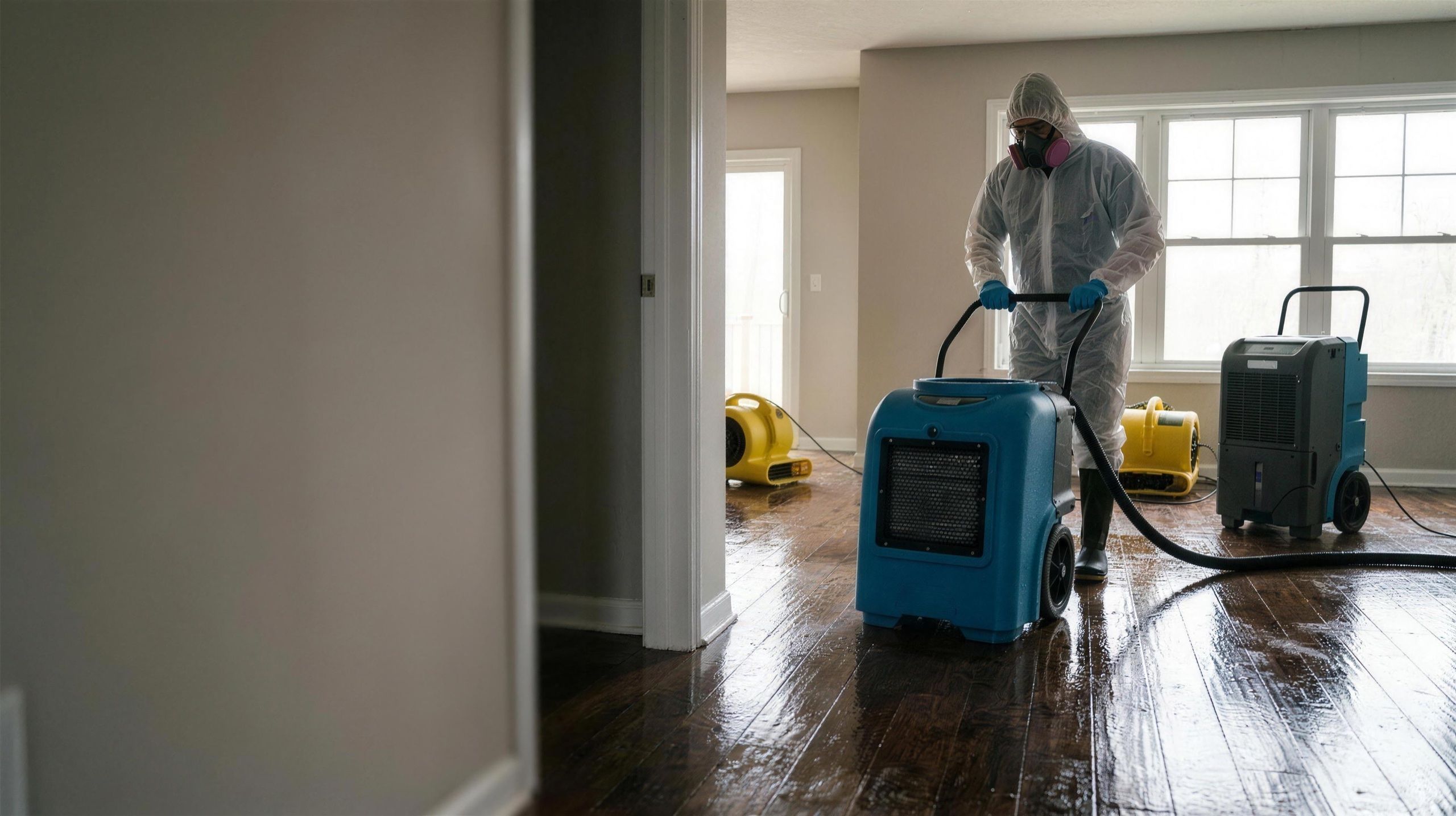
Commercial extractors remove standing water. LGR dehumidifiers and air movers target every wet cavity mapped by thermal imaging. Antimicrobial treatment halts mold before it colonizes.

Swipe to see the full timeline →
The faster we start, the more we can save. Call anytime — we are here 24/7.
Call Now: (980) 277‑3700

What Happened? We Handle All of It.

It doesn't matter how the water got in. We extract it, dry the structure, and rebuild everything we tear out. Here's what we see every week.

Burst Pipes & Supply Line Breaks

A burst pipe can dump hundreds of gallons into your home in minutes. We extract the water, strip wet materials, and dry the structure before mold starts. Most homeowner policies cover this — we handle the claim for you.

Get help now

Water Heater, Washing Machine & Dishwasher Leaks

Appliance failures flood kitchens, laundry rooms, and basements without warning. Water wicks into cabinets, subfloors, and walls fast. We pull everything wet, dry the cavity, and rebuild it — cabinets, flooring, drywall, all of it.

Get help now

Storm & Flood Damage

Heavy rain, flash floods, and hurricanes push water into homes through doors, windows, and foundations. We pump it out, set up full drying systems, and protect your belongings while the structure dries.

Learn more

Sewage Backups

Sewage is a biohazard — it contains bacteria, parasites, and viruses. We remove the waste in full protective gear, sanitize every surface, apply antimicrobial treatment, and replace contaminated materials.

Learn more

Roof Leaks & Ceiling Damage

A slow roof leak can soak insulation and drywall for weeks before you notice the stain. We find the full extent of the moisture with thermal cameras, dry the structure, and replace damaged ceilings, insulation, and paint.

Get help now

Basement & Crawlspace Flooding

Standing water under your home attacks the foundation, floor joists, and anything stored below. We pump it out, set commercial dehumidifiers in tight spaces, and repair structural damage before it spreads.

Learn more
Water in your home right now? Don't wait — damage doubles every 24 hours.
Call Now: (980) 277‑3700

How Professional Water Damage Restoration Works

Every restoration job follows the same proven sequence. Here is exactly what our IICRC-certified technicians do at each stage and why it matters for your home and your insurance claim.
1

Emergency Triage and Source Control

Before we extract a single gallon, we identify and stop the water source. If it is a burst pipe, we shut the supply. If it is a roof leak, we tarp the opening. Stopping the source prevents re-saturation during drying and protects materials we can still save.

2

Moisture Mapping with FLIR and Protimeters

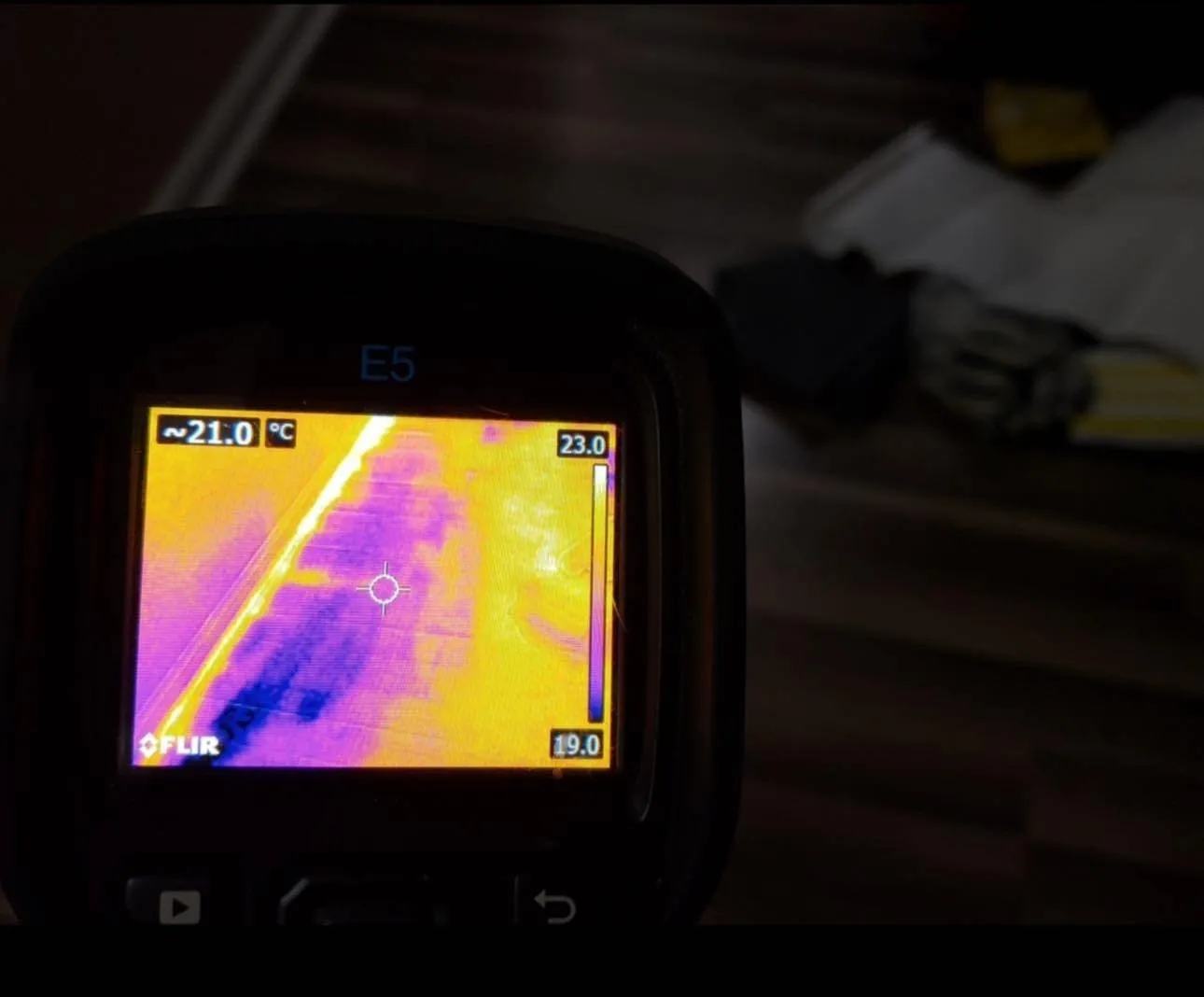
We scan every wall, floor, and ceiling with FLIR thermal cameras and Protimeter moisture meters to build a complete moisture map. This map guides equipment placement and gives your adjuster the documentation needed to approve the claim without pushback.

Technician using FLIR thermal camera to map hidden moisture inside a wall during water damage restoration
Thermal imaging reveals moisture behind finished walls that visual inspection cannot detect
3

Commercial Extraction and Drying System Setup

We deploy truck-mounted extractors rated at over 200 gallons per hour, then place LGR dehumidifiers and centrifugal air movers based on the moisture map. Every affected room gets calculated airflow and dehumidification — not guesswork.

4

Daily Monitoring and Insurance Documentation

We return every day to log moisture readings at every mapped point. These daily logs, combined with timestamped photos and psychrometric data, give your insurance company the objective proof they need to process the claim without delays or denials.

5

Tear-Out, Rebuild, and Final Verification

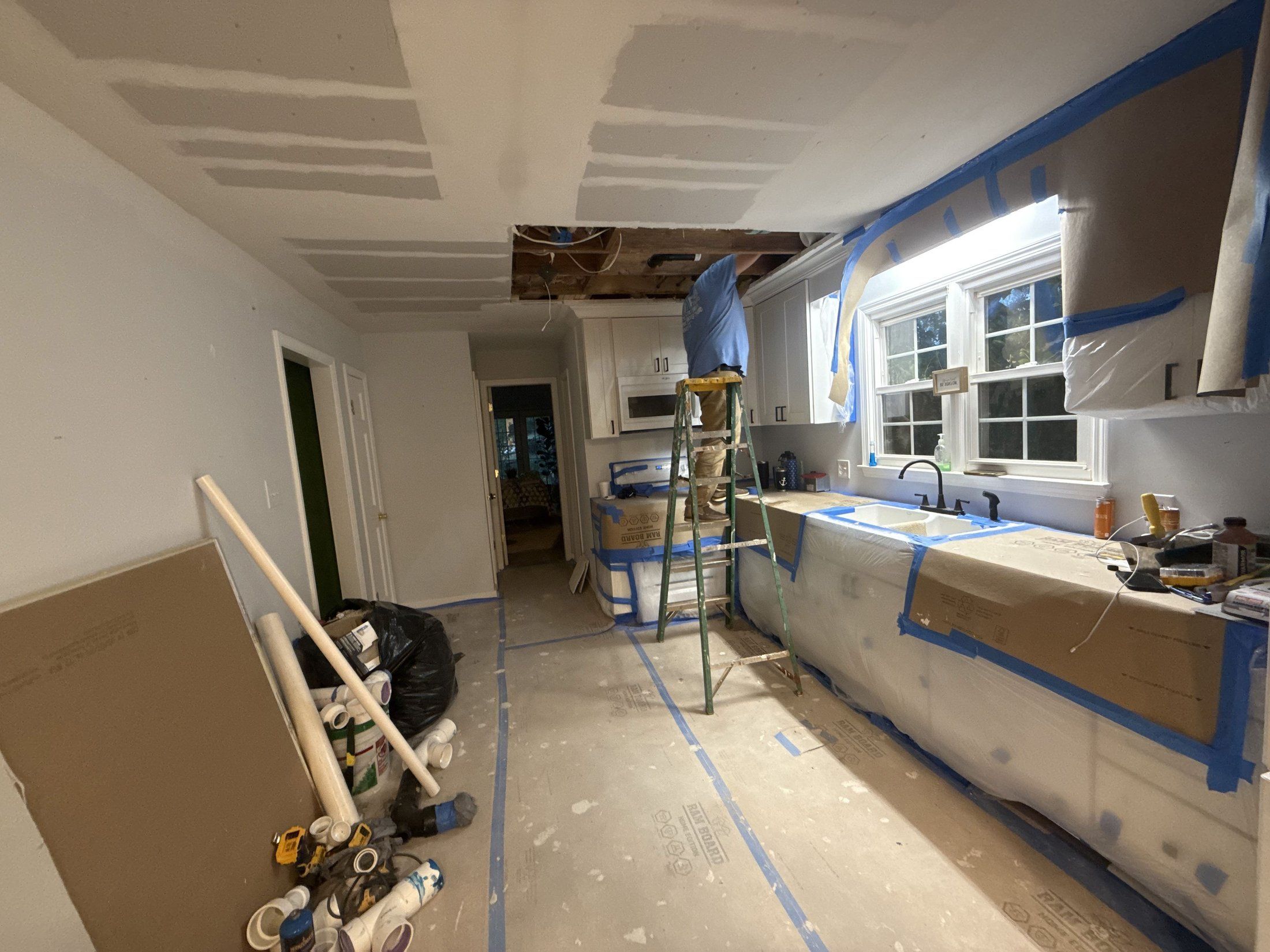
Once the structure hits target dryness levels, we remove damaged materials and rebuild. Drywall, paint, trim, cabinets, flooring, and subfloors — our own crew handles it all. We take final moisture readings to verify the home is dry before we close the job.

Every step is documented. Every reading is logged. Your claim stays on track from day one.
Call Now: (980) 277‑3700

Not All Water Damage Is the Same

The type of water that entered your home determines how we treat it, what materials can be saved, and how dangerous it is to your family. Here are the three categories.
Category 1
Lowest Risk

Clean Water

Clean water comes from a sanitary source and poses no immediate health threat. However, if it sits for more than 48 hours without professional drying, it will degrade into grey water as bacteria multiply. Fast extraction is still critical.

Common Sources
  • Burst pipes
  • Supply line breaks
  • Overflowing tubs or sinks
  • Rainwater intrusion
  • Melting ice or snow
Category 2
Health Hazard

Grey Water

Grey water is contaminated and can cause illness if ingested or touched. Carpet pads and porous materials exposed to grey water must be removed and disposed of immediately. If left untreated for 48 hours, grey water becomes black water.

Common Sources
  • Washing machine overflow
  • Dishwasher leaks
  • Toilet overflow (urine only)
  • Sump pump failure
  • Broken aquariums
Category 3
Severe Health Threat

Black Water

Black water contains sewage, bacteria, parasites, pesticides, and potentially toxic chemicals. It requires full protective equipment, safe disposal, antimicrobial treatment, and removal of all affected porous materials. Do not attempt to clean it yourself.

Common Sources
  • Sewage backups
  • Toilet backflow (fecal)
  • Rising floodwater
  • River or creek overflow
  • Standing water over 48 hrs

Why this matters: The water category determines your insurance coverage, the materials we can save, and the safety protocols we follow. We test and classify the water on arrival so you know exactly what you are dealing with — and so your claim is documented correctly from day one.

What Sets a Full-Service Restoration Company Apart

Most restoration companies only handle mitigation — they rip out wet materials and leave. That means you hire a second contractor for drywall, a third for paint, a fourth for flooring. Carolina Pro Restoration does the entire job with one crew and one project manager.
Others CPR
Emergency water extraction
Structural drying with daily monitoring Sometimes
Drywall, paint, trim, and flooring rebuild
IICRC certified technicians Sometimes
Thermal imaging on every job
Xactimate estimates for insurance Sometimes
One dedicated project manager
Licensed in SC and NC Sometimes

Your Insurance Claim, Handled from Day One

Insurance adjusters use Xactimate to price every restoration job. When your contractor writes the estimate in a different format, it creates back-and-forth that delays your claim by weeks. We write every line item in Xactimate from the start so your adjuster can approve it without translation.
  • Damage photos taken on arrival and every day after
  • Moisture readings logged daily at every mapped point
  • Xactimate line-item estimate written to match adjuster format
  • Direct communication with your adjuster — you stay out of the middle
  • We bill your insurance company directly — zero out of pocket for covered work
Call Now: (980) 277‑3700

Trusted by Homeowners and Property Managers

From emergency water removal to full rebuilds, here is what people say about working with Carolina Pro Restoration.
Emergency Extraction
★★★★★
This team was very professional and did a thorough job with water removal from our house. Got the job done and done well. They are the very best!
M
Mardaly Jimenez
Google Review
Full Reconstruction
★★★★★
Zach came over to my house to repair all damage better than new. He was prompt, clean, and professional. I highly recommend them!
S
Sam Bender
Google Review
Claims Handled
★★★★★
The crew was professional and on top of everything. I was really happy that they worked with my insurance company, and everything was handled with ease.
R
Riverbend HOA
Google Review
Swipe for more reviews →

Understanding Water Damage Restoration

Technical answers to the questions homeowners ask most about extraction, drying, rebuild, and insurance.

What is the difference between Category 1, 2, and 3 water damage?

Category 1 (clean water) comes from a sanitary source like a burst supply line. Category 2 (grey water) carries contaminants — think washing machine overflow or sump pump failure. Category 3 (black water) includes sewage, rising floodwater, or any water that has sat for more than 48 hours. The category determines which materials can be saved, what safety protocols are required, and how your insurance claim is documented.

Can hardwood floors be saved after water damage?

It depends on how long the water sat and whether the boards have cupped, crowned, or delaminated. If we start drying within the first 24 hours and the subfloor is still structurally sound, hardwood can often be dried in place using weighted drying mats and monitored dehumidification. Once moisture content returns to normal range (6 to 9 percent for most species), the flooring is re-evaluated. If warping is permanent, we remove and replace only the damaged sections so the repair blends with the existing floor.

What equipment do you use for water extraction and drying?

We use truck-mounted extractors for high-volume water removal, weighted extraction tools for carpet and pad, LGR (low grain refrigerant) dehumidifiers for structural drying, high-velocity air movers to accelerate evaporation, FLIR thermal imaging cameras to locate moisture behind walls and under floors, and pin and pinless moisture meters to track drying progress daily. Every piece of equipment is commercial grade — not the rental-store units some companies use.

How do you prevent mold after water damage?

Mold prevention starts with speed. We begin extraction within 60 minutes of your call. After removing standing water, we apply EPA-registered antimicrobial solution to all exposed framing, subfloor, and sheathing. We then set dehumidifiers to hold relative humidity below 50 percent throughout the drying period. Moisture readings are taken daily and logged. If any material cannot be dried to target levels within the IICRC-recommended timeframe, we remove it. This documented approach also protects your insurance claim if mold questions come up later.

What does Xactimate have to do with my water damage claim?

Xactimate is the estimating software used by almost every insurance adjuster in the country. When your restoration company writes the repair estimate in the same platform your adjuster uses, line items match up and approvals move faster. We build the Xactimate estimate on site using current local pricing data, attach daily moisture logs and photos, and submit it directly to your adjuster. This eliminates the back-and-forth that delays most claims.

Should I file an insurance claim for water damage or pay out of pocket?

If the damage is from a sudden and accidental event — burst pipe, appliance failure, storm — your homeowners policy almost always covers it. Filing a claim makes sense when repair costs exceed your deductible, which they usually do once drywall, flooring, and cabinetry are involved. We provide a free on-site assessment with a written scope of work so you can see the full cost before deciding. If you do file, we handle every step of the claims process for you.

How do I know when my house is fully dry after water damage?

We measure moisture content daily with pin and pinless meters at multiple points — framing, subfloor, drywall, and concrete. Drying is complete when all readings return to the dry standard for each material, which is typically within 1 to 2 percentage points of unaffected areas in the same home. We also monitor relative humidity and temperature to confirm conditions no longer support microbial growth. You receive a final drying certificate documenting every reading before we begin the rebuild phase.

What is the difference between mitigation and restoration?

Mitigation is the emergency phase: water extraction, demolition of unsalvageable materials, structural drying, and antimicrobial treatment. Its purpose is to stop the damage from getting worse. Restoration (also called reconstruction) is the rebuild phase: replacing drywall, painting, installing new flooring, hanging cabinets, and finishing trim. Most companies only do mitigation and then hand you off to a general contractor for the rebuild. We handle both phases with one team and one project manager, which keeps the job on schedule and eliminates finger-pointing between contractors.

Have a question we did not cover? Call us — we are available 24/7.
Call Now: (980) 277‑3700

We Respond Across the Charlotte Metro and Surrounding Carolinas

Based in Fort Mill, SC with crews positioned across York County and the south Charlotte corridor. Select your city below for local response times and details.

Fast Response Across the Region

Our trucks reach most of York County and the south Charlotte metro in under an hour.

We Proudly Serve
3650 Centre Circle, Suite I
Fort Mill, SC 29715
(980) 277-3700

Need Water Damage Help? Talk to Our Team Now.

Request a Free Inspection

Fill out this short form and our team will call you back fast. For emergencies, call us directly — we pick up 24/7.
  • No cost for the on-site inspection
  • We respond to form requests within 30 minutes
  • No pressure, no obligation
  • We bring all the equipment on the first visit
  • Safe practices for families and pets
(980) 277-3700
24/7 Emergency Line
Get a Fast Response
We will call you back shortly after you submit.